ID.4 2021 ➤, ID.3 2020 ➤
Electric rear-wheel drive EIP220 and all-wheel drive EIA200, EIP220 - Edition 11.2021
3
Hazard classification of high-voltage
system
3.1
Hazard classification for the high-volt‐
age system
DANGER
The vehicle’s high-voltage system and the high-voltage bat‐
tery are dangerous and can cause burns or other injuries and
even lead to a fatal electric shock.
– Any work on the high-voltage system, or on systems which
could be indirectly affected by it, must only be carried out
by properly trained and qualified expert personnel.
– In the event of queries or uncertainties regarding the terms
"high-voltage technician" or "high-voltage expert", or those
concerning the high-voltage system, the responsible im‐
porter must be contacted prior to the start of any work.
– Any repair work must be performed in accordance with
applicable laws and regulations, the state-of-the-art tech‐
nology, any relevant accident prevention regulations (in
Germany, including but not limited to the Information of
the German Social Accident Insurance (DGUV) 200-005 –
Qualification training for work on vehicles with high-voltage
system), as well as this workshop manual.
– Only the HVT is authorised to certify that the high-voltage
system has been de-energised.
– All work measures necessary for the vehicle may only be
carried out by a person qualified to at least the level of
electrically instructed person (EIP)
– Regardless of the work to be performed, visually inspect
high-voltage components in the work area.
– All work measures to be carried out on an ID.4 may only
be carried out by a person qualified to at least the level of
electrically instructed person (EIP).
– Regardless of the work to be performed, visually inspect
high-voltage components in the work area.
– High-voltage cables must not be overly bent or kinked.
– In the event of conspicuous findings or uncertainties, the
high-voltage technician (HVT) or the high-voltage expert
(HVE) must be consulted.
– Any work involving metal-removing, deforming and sharp-
edged tools or heat sources such as welding, soldering, hot
air, thermal bonding and infrared drying in the vicinity of
high-voltage components and cables is prohibited. In this
case the high-voltage system must be de-energised and the
respective component removed or sufficiently protected.
– All listed work refers to the removal and installation or the
renewal of the individual components.
– For regular maintenance work, the high-voltage system does
not have to be de-energised.
For reasons of safety, the following activities must not be car‐
ried out during charging:
– Activities that prolong the charging process.
3. Hazard classification of high-voltage system
5

ID.4 2021 ➤, ID.3 2020 ➤
Electric rear-wheel drive EIP220 and all-wheel drive EIA200, EIP220 - Edition 11.2021
– Activities for which the vehicle must be de-energised and
made safe in accordance with the ensuing hazard rating.
– Activities during which the vehicle is moved and electrical
wires and connectors could be placed under strain (pulled).
– Activities during which the connected charging cable could
present a danger of tripping and injury.
– Activities during which the charging cable could block work
paths and emergency exit routes.
– Activities on the 12V battery.
The following activities may be carried out with the ⇒ Vehicle
diagnostic tester during charging:
– The event memory and measured values may be read.
– The vehicle and control units may be identified.
Important
•
Before work is carried out on the following components, the
system must be de-energised by a high-voltage technician
(HVT) or a high-voltage expert (HVE).
Explanation of qualifications
Qualification Volks‐ DGUV-I 200-005
wagen
Scenario
EIP (person with
electrical training)
Chapter 2
Induction training
for non-electrical
work (< 60 VDC)
HVT (high-voltage Chapter 3.1 b
technician)
Working on inher‐
ently safe HV pro‐
duction vehicles
♦ Vehicles are de-
energised exclu‐
sively with certif‐
ication.
♦ Complete con‐
tact protection in
place.
HVE level 1 (high- Chapter 3.2 b
voltage expert)
Working on not in‐
herently safe HV
production vehicles
♦ Vehicles are al‐
so de-energised
without certifica‐
tion or there is
no complete
contact protec‐
tion in place,
e.g. in the event
of an accident.
6
Rep. gr.00 - Technical data

ID.4 2021 ➤, ID.3 2020 ➤
Electric rear-wheel drive EIP220 and all-wheel drive EIA200, EIP220 - Edition 11.2021
Qualification Volks‐ DGUV-I 200-005
Scenario
wagen
HVE level 2 (high- Chapter 3.3
voltage expert)
Work on live accu‐
mulators
♦ Working on
parts supplied
with voltage, in‐
evitably with no
contact protec‐
tion, for fault
finding, compo‐
nent replace‐
ment, etc.
Work on power unit
When working on
Must the HVT de-ener‐ Minimum
gise high-voltage system qualifica‐
before work is started? tion:
the following com‐
ponents:
Yes
(man‐
ual
Yes
(only
diag‐
No
power nostic
discon‐ power
nect) discon‐
nec‐
tion)
Power unit with
EIP
X
♦ three-phase cur‐
rent drive -VX54-
♦ Gearbox
♦ Drive motor tem‐
perature sender/
rotor position
sender -G712-/-
G713-
♦ Power and con‐
trol electronics
for electric drive -
JX1-
Work on high-voltage system
When working on
the following com‐
ponents:
Must the HVT de-ener‐ Minimum
gise high-voltage system qualifica‐
before work is started? tion:
Yes
(man‐
ual
Yes
(only
diag‐
No
power nostic
discon‐ power
nect) discon‐
nec‐
tion)
Potential equalisa‐
tion lines (earth)
with connection to
HV components
HVT
X
Measure insulation
X
HVT
resistance
3. Hazard classification of high-voltage system
7

ID.4 2021 ➤, ID.3 2020 ➤
Electric rear-wheel drive EIP220 and all-wheel drive EIA200, EIP220 - Edition 11.2021
When working on
the following com‐
ponents:
Must the HVT de-ener‐ Minimum
gise high-voltage system qualifica‐
before work is started? tion:
Yes
(man‐
ual
Yes
(only
diag‐
No
power nostic
discon‐ power
nect) discon‐
nec‐
tion)
Maintenance con‐
nector for high-volt‐
age system (service
connector, service
disconnector)
EIP
X
PX – high-voltage
cables (orange) in
vehicle
X
HVT
Work on heating and air conditioning system
When working on
the following com‐
ponents:
Must the HVT de-ener‐
Minimum
gise high-voltage system qualifica‐
before work is started?
tion:
Yes
(man‐
ual
Yes
(only
diag‐
No
power nostic
discon‐ power
nect) discon‐
nec‐
tion)
Air conditioner com‐
pressor -VX81-
EIP
X
X
X
High-voltage heater
EIP
EIP
EIP
(PTC) -Z115-
PTC heater ele‐
ment 3 -Z132-
Work on heating
and air conditioning
system in vehicle in‐
terior
Refrigerant lines in
the vehicle periph‐
ery (work which is
not directly on the
AC compressor and
can be carried out
without opening the
refrigerant circuit,
e.g. loosening and
securing refrigerant
lines)
X
X
EIP
Air conditioning per‐
formance test (for
checking the pres‐
sure levels in the
refrigerant circuit
by means of air
X
EIP
conditioning service
equipment)
8
Rep. gr.00 - Technical data

ID.4 2021 ➤, ID.3 2020 ➤
Electric rear-wheel drive EIP220 and all-wheel drive EIA200, EIP220 - Edition 11.2021
When working on
the following com‐
ponents:
Must the HVT de-ener‐ Minimum
gise high-voltage system qualifica‐
before work is started? tion:
Yes
(man‐
ual
Yes
(only
diag‐
No
power nostic
discon‐ power
nect) discon‐
nec‐
tion)
Refrigerant lines di‐
rectly on the AC
compressor
EIP
X
X
Extract, evacuate or
EIP
EIP
fill refrigerant
Air intake box of
heater and air con‐
ditioning unit
X
Work on charging connection
– Work on charging connection
When working on
the following com‐
ponents:
Must the HVT de-ener‐
Minimum
gise high-voltage system qualifica‐
before work is started?
tion:
Yes
(man‐
ual
Yes
(only
diag‐
No
power nostic
discon‐ power
nect) discon‐
nec‐
tion)
High-voltage battery
charging socket 1 -
UX4- with
EIP
X
♦ Temperature
sender for charg‐
ing socket 1 -
G853-
♦ Actuator for high-
voltage charging
socket lock 1 -
F498-
♦ Manual release
mechanism for
charging connec‐
tor
Working on charging unit and voltage converter
3. Hazard classification of high-voltage system
9

ID.4 2021 ➤, ID.3 2020 ➤
Electric rear-wheel drive EIP220 and all-wheel drive EIA200, EIP220 - Edition 11.2021
When working on
the following com‐
ponents:
Must the HVT de-ener‐ Minimum
gise high-voltage system qualifica‐
before work is started? tion:
Yes
(man‐
ual
Yes
(only
diag‐
No
power nostic
discon‐ power
nect) discon‐
nec‐
tion)
Charging unit 1 for
high-voltage battery
-AX4-
EIP
X
With control unit
for high-voltage bat‐
tery charging unit -
J1050-
Voltage converter -
X
EIP
A19-
Work on high-voltage battery
– Work on high-voltage battery
When working on
the following com‐
ponents:
Must the HVT de-ener‐
Minimum
gise high-voltage system qualifica‐
before work is started?
tion:
Yes
(man‐
ual
Yes
(only
diag‐
No
power nostic
discon‐ power
nect) discon‐
nec‐
tion)
Removing and in‐
stalling high-voltage
battery 1 -AX2-
HVT
X
Disconnect high
voltage system con‐
nection
Disconnect low-volt‐
age connection of
high-voltage battery
X
HVT
EIP
X
Switching unit for
high-voltage battery,
positive terminal -
SX8- and switch‐
ing unit for high-volt‐
age battery, nega‐
tive terminal -SX7-
(battery removed)
HVE
Open high-voltage
battery 1 -AX2- (bat‐
tery removed)
Bond high-voltage
battery 1 -AX2- (bat‐
tery removed)
Battery module 1 -
J991- and other bat‐
tery modules (bat‐
tery removed)
HVE
HVE
HVE
10
Rep. gr.00 - Technical data

ID.4 2021 ➤, ID.3 2020 ➤
Electric rear-wheel drive EIP220 and all-wheel drive EIA200, EIP220 - Edition 11.2021
When working on
the following com‐
ponents:
Must the HVT de-ener‐ Minimum
gise high-voltage system qualifica‐
before work is started? tion:
Yes
(man‐
ual
Yes
(only
diag‐
No
power nostic
discon‐ power
nect) discon‐
nec‐
tion)
Battery regulation
control unit -J840-
HVE
Battery module con‐
HVE
trol unit
Work on accident vehicles
– Work on accident vehicles
When working on
the following com‐
ponents:
Must the HVT de-ener‐
Minimum
gise high-voltage system qualifica‐
before work is started?
tion:
Yes
(man‐
ual
Yes
(only
diag‐
No
power nostic
discon‐ power
nect) discon‐
nec‐
tion)
Preliminary evalua‐
tion of degree of
danger
HVT
Body work (with
X
EIP
EIP
straightening jig)
Paint vehicle – ob‐
serve instructions in
paint manual
X
Work in vicinity of high-voltage components
When working on
the following com‐
ponents or for fol‐
lowing work:
Must the HVT de-ener‐
Minimum
gise high-voltage system qualifica‐
before work is started?
tion:
Yes
(man‐
ual
Yes
(only
diag‐
No
power nostic
discon‐ power
nect) discon‐
nec‐
tion)
Body work (assem‐
bly work as well as
glass and dent re‐
pairs)
EIP
X
Steering rack
Subframe, front
Front brakes
Rear brakes
Brake servo
X
X
EIP
EIP
EIP
EIP
EIP
X
X
X
3. Hazard classification of high-voltage system
11

ID.4 2021 ➤, ID.3 2020 ➤
Electric rear-wheel drive EIP220 and all-wheel drive EIA200, EIP220 - Edition 11.2021
When working on
the following com‐
ponents or for fol‐
lowing work:
Must the HVT de-ener‐
gise high-voltage system qualifica‐
before work is started? tion:
Minimum
Yes
(man‐
ual
Yes
(only
diag‐
No
power nostic
discon‐ power
nect) discon‐
nec‐
tion)
Rear axle and run‐
ning gear
EIP
X
Underbody cladding
X
EIP
EIP
When welding, cov‐
er high-voltage com‐
ponents and visually
inspect afterwards
X
Work involving
X
EIP
metal-removing, de‐
forming and sharp-
edged tools or heat
sources such as
welding, soldering,
hot air, thermal
bonding and infra‐
red drying in the vi‐
cinity of high-voltage
components and ca‐
bles
Control units and
electric components
of 12-V system (ex‐
cluding airbag)
X
EIP
Battery -A-
X
X
EIP
EIP
Front left headlight -
MX1-
Front right headlight
-MX2-
X
X
EIP
EIP
Change bulb in
headlight
General work
When working on
the following com‐
ponents:
De-energise high-voltage Minimum
system before work is
started?
qualifica‐
tion:
Yes
(man‐
ual
Yes
(only
diag‐
No
power nostic
discon‐ power
nect) discon‐
nec‐
tion)
Drain and fill fluids
(coolant and oils)
Coolant circuit and
coolant expansion
tank
EIP
EIP
X
X
Change tyres
X
EIP
12
Rep. gr.00 - Technical data

ID.4 2021 ➤, ID.3 2020 ➤
Electric rear-wheel drive EIP220 and all-wheel drive EIA200, EIP220 - Edition 11.2021
When working on
De-energise high-voltage Minimum
the following com‐
ponents:
system before work is
started?
qualifica‐
tion:
Yes
(man‐
ual
Yes
(only
diag‐
No
power nostic
discon‐ power
nect) discon‐
nec‐
tion)
Miscellaneous work
on 12 V system (ex‐
cluding airbag)
Work on earth
points of 12 V
system (without po‐
tential equalisation
lines)
EIP
EIP
X
X
Tail lights
X
X
EIP
EIP
Renew/repair win‐
dows
Repairs in vehicle
interior
X
EIP
Repairs in roof area
Repairs on rear lid
Repairs on bumpers
X
X
X
X
EIP
EIP
EIP
EIP
Move lock carrier to
service position
Removing and in‐
stalling lock carrier
X
X
X
X
X
EIP
EIP
EIP
EIP
EIP
Repair work on lock
carrier
Move lock carrier to
service position
Removing and in‐
stalling lock carrier
Repair work on lock
carrier
3. Hazard classification of high-voltage system
13
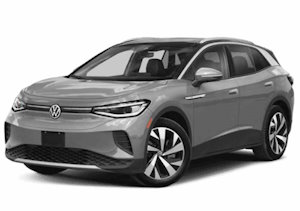 2024 VW ID.4 Owner's Manual