Fig. 128 Warning sign on the high-voltage battery.
Exposure to high voltages can result in serious injury or even death. Never touch the battery terminals with your fingers or with tools, or allow jewelry or other
metal items in contact with your body to touch the battery terminals.
The high-voltage battery contains hazardous liquids and solids. Escaping gas can cause serious chemical burns and could blind you. When working on the
high-voltage battery, always wear suitable protective eyewear and protective clothing to prevent battery fluid from coming into contact with your skin and eyes.
If battery fluid does come into contact with your skin or eyes, run clean water over the affected areas for at least 15 minutes and seek medical attention
immediately.
Under certain circumstances, the high-voltage battery can catch fire. Never expose the high-voltage battery to fire, sparks or naked flames. To prevent damage
and fluid leakage, always handle the high-voltage battery with care.
Keep children away from the high-voltage battery at all times.
Further information and warnings can be found in the Owner's Manual and in the workshop information.
Improper handling of the high-voltage battery can result in serious injury or even death. Never remove the cover from the high-voltage battery and never
disassemble the high-voltage battery.
Improper handling of the high-voltage battery can result in serious injury or even death. Have all maintenance procedures on the high-voltage battery
performed by fully qualified professionals. Never modify the high-voltage battery. When the high-voltage battery is open, do not allow it to come into contact
with water or other liquids. Liquids can cause short-circuiting, electric shock and burns.
Charging the high-voltage battery
Introduction
Requirements
Vehicle's drive system is deactivated.
Charging cable and charging infrastructure are working correctly and have been checked ⇒
.
Types of charging
AC (alternating current) charging at a charging station or wall box ⇒ Charging.
It is charged with a high charging power. The maximum achievable charging power results from the charging station used, the charging cable used and the
equipment of the battery charger.
AC (alternating current) charging at a mains socket ⇒ Charging.
The household's electrical installation must be checked and must be working correctly ⇒
DC (Direct Current) Charging at the Charging Station or Wall Box ⇒ Charging:
. Plenty of charging time should be scheduled in, e.g. overnight.
It is charged with a very high charging power. This significantly reduces the charging time. Please read the notes on frequent charging with direct current (DC)
⇒
.
249

NOTICE
A very high charging power is used for fast-charging with direct current (DC). Frequent fast-charging can permanently reduce the battery capacity of the high-
voltage battery.
The high-voltage battery should be mainly charged with alternating current (AC ) at a charging station or wall box.
When charging with alternating current (AC), it is recommended to charge with maximum charging power at a charging station or wall box. This achieves a
higher efficiency compared to charging with a mains socket.
Please note the technical information about your vehicle's charging power. For more information contact an authorized Volkswagen dealer or authorized
Volkswagen Service Facility.
WARNING
Failure to comply with the operating and safety instructions or improper use of the high-voltage battery and charging cable could result in a short circuit, electric
shock, explosions and fire. There is a risk of damage and serious or fatal injuries.
Always end the charging process before removing the mains plug to avoid coming into contact with residual power in the charger.
Pay attention to the safety and operating information for the supplied charging cable.
In the household, only use a connection that is suitable for electric vehicles and has been installed and tested by qualified professionals.
Never charge in areas where there is a risk of explosion. Charging cable components can trigger sparks and can ignite flammable or explosive vapors.
Always protect electrical connections from direct contact with water, damp, and other fluids.
Do not carry out any other work on or around the vehicle during charging for safety reasons.
WARNING
Driving with a low high-voltage battery charge level can cause the vehicle to become stranded in traffic. Accidents and serious injuries could result.
Always charge the high-voltage battery before starting a journey.
The high-voltage battery can only be charged at charging stations which meet the requirements of the country and abide by at least the following norms:
IEC 61851 and IEC 62196 (Europe).
GB/T 18487 and GB/T 20234 (China) in the 2015 version.
SAE J1772 (Japan).
SAE J1772 (USA and Canada).
Handling the high-voltage battery
Please read the introductory information and heed the Warnings and Notice ⇒
and Introduction.
Reliability and battery capacity of a high-voltage battery
A lithium-ion battery is generally subject to a physical and chemical aging and wearing process over its service life. Correct handling of the high-voltage battery can
significantly contribute to a reliable battery state and a high usable battery capacity and range in the long-term. This makes it all the more important to comply with
the following care instructions for the high-voltage battery. If you follow these care instructions, the vehicle can maintain its value for a long time.
Also observe the applicable Volkswagen guarantee and warranty conditions for the high-voltage battery. For more information, contact your authorized Volkswagen
dealer or authorized Volkswagen Service Facility.
Charging recommendations
Volkswagen recommends observing the following charging recommendations:
For everyday use, set the maximum battery charge level to 80% in the Infotainment system ⇒ Battery charge limits.
Charge the high-voltage battery once the battery charge level is below 20%. Ideally avoid the high-voltage battery being fully discharged
⇒
.
Charge the high-voltage battery to 100% before long journeys. Set a departure time in the Infotainment system ⇒ Departure Times (time-delayed charging) a
drive off as immediately after charging as possible.
Avoid regular rapid charging with direct current (DC).
NOTICE
The high-voltage battery must not be manipulated for use as a stationary power source. This may lead to irreversible damage to the high-voltage battery.
250

Never make technical modifications to or tamper with the high-voltage battery and high-voltage components.
Battery Care Mode
The maximum battery charge level is automatically limited to 80 % for the next charging process.
1. Tap HOME in the Infotainment system.
2. Tap
3. Tap
Charging.
Setup.
4. Activate the function.
Volkswagen recommends using the Battery Care Mode function for everyday use to protect the high-voltage battery.
If charging at a certain departure time is activated, the function cannot be used.
Periods when the vehicle is unused
If you intend to leave the vehicle parked for longer periods, park it with a battery charge level between 40% and 70%.
Ideally avoid high outside temperatures, especially in direct sunlight, when the vehicle is parked for longer periods.
To improve convenience and performance, use stationary air conditioning when required (depending on the vehicle equipment), especially at temperatures
below approx. -15 °C (approx. +5 °F) ⇒ Operating the stationary air conditioning.
NOTICE
If the vehicle is parked for an extended period with a discharged high-voltage battery, the high-voltage battery may not be able to charge or the vehicle might not
start. In the long-term, this can lead to irreversible damage to the high-voltage battery.
Charge the high-voltage battery at regular intervals.
The high-voltage battery has less power available in very low temperatures. If the battery charge level is also low, the driving power may also be limited for a
short time after pulling away.
Charging
Please read the introductory information and heed the Warnings and Notice ⇒
and Introduction.
The high-voltage battery can be
charged with alternating current at the
charging station or GFI outlet (AC
charging) or with direct current at the
rapid charging station (DC charging).
Connecting the charging cable
Fig. 129 Behind the rear-right charging socket flap: Charging socket.
Charging process display.
Charging socket with AC connection (top) and DC connection (bottom).
251

Protective cap on the support.
1. Unlock the vehicle.
2. Press gently on the charging socket flap to open it.
3. Remove the charging cable from the charging station or connect to the power supply and fully unwind.
Charging cable for mains sockets: The protective device of the charging cable will carry out a self-test ⇒ Charging cable for mains sockets .
4. Insert the charging connector straight into the charging socket and check whether it is fully inserted fig. 130.
Fig. 130 Fully inserted charging connector (general example).
When the charging connector is plugged in, the white indicator light in the instrument cluster comes on.
Starting the charging process
1. To achieve the desired range with immediate charging, set the maximum battery charge level on the charging information screen.
2. If necessary, activate the charging station.
The charging process starts immediately or after a delay, depending on the settings for the stored charging location.
When the high-voltage battery is being charged, the green indicator light in the instrument cluster blinks.
Interrupting the charging process
The charging process can be interrupted at any time.
1. Tap
in the Infotainment system.
Or: Press the central locking button when AC charging at the charging station or GFI outlet.
When Automatically release the AC charging cable is selected in the Infotainment system, the charging connector is automatically released.
2. To restart the charging process, tap
.
3. Renewed activation may be required at the charging station.
After charging
Once the high-voltage battery has been charged, the charging process indicator on the charging socket turns green.
Charging station or GFI outlet (AC charging):
1. Unlock the vehicle.
2. Press the release button on the charging connector and remove the charging connector.
Or: if Automatically releasing the AC charging cable is selected in the Infotainment system, the charging connector can be unplugged immediately.
3. Disconnect the charging cable from the power supply and replace the protective cap.
4. Close the charging socket flap until it audibly engages.
Rapid charging station (DC charging): The charging connector is automatically unlocked from the charging station after charging and can be disconnected.
Charging for the first time and charging after the vehicle is parked for a long time
If the high-voltage battery is new or has not been charged for a long time, it may not achieve its maximum charge level until several charging processes have been
completed. This is a normal feature and is not a vehicle malfunction.
252

If the vehicle is not used for a long period, the high-voltage battery must be charged within a period of no more than four months → page , Handling the high-volta
battery.
The charging cable for the charging station must not exceed approx. 30 m (approx. 98 ft) in length.
In extremely low or extremely high temperatures the high-voltage battery charging process may be limited.
Charging process indicator
Please read the introductory information and heed the Warnings and Notice ⇒
and Introduction.
Fig. 131 Behind the charging socket flap: charging process indicator.
An LED on the charging socket shows the charging process status fig. 131 (arrow).
LED displays
A label on the charging socket describes the LED displays fig. 132.
Fig. 132 LED light displays (general example).
Flashing: Charging connector has been detected.
Blinking white: Vehicle is being connected to the charging infrastructure. Preparing for charging.
Light comes on: No active charging function.
Pulsing green: The high-voltage battery is being charged.
Green light comes on: Charging process successfully concluded.
Green light comes on alternately with red indicator: Charging with reduced current to prevent becoming stranded in traffic. There is a malfunction, e.g. the
charging connector is not fully inserted.
253

Flashing green: A time-delayed charging process has been activated and has not yet begun.
Red light comes on: Charging system malfunction.
If the charging process indicator continuously displays a malfunction related to the vehicle power supply or charging system, contact an authorized
Volkswagen dealer or authorized Volkswagen Service Facility. Volkswagen recommends contacting an authorized Volkswagen dealer or authorized Volkswagen
Service Facility.
Charging socket light
If one of the following conditions applies, the side lighting of the charging socket switches on in darkness:
The vehicle was unlocked.
The charging connector was removed from the charging socket.
After locking or unlocking the vehicle, the light turns off automatically after a certain time.
Troubleshooting
Please read the introductory information and heed the Warnings and Notice ⇒
and Risk of fire
The red central warning light
and Introduction.
comes on and is shown in the Volkswagen Digital Cockpit display together with a message. A warning tone sounds continuously.
The temperature of the high-voltage battery is too high ⇒
.
1.
Do not continue driving! Exit the vehicle and inform the fire department immediately.
If the message disappears, the warning light
is displayed.
DANGER
If there is a risk of fire in high-voltage battery cells, toxic gases may escape or high-voltage components may be live. There is a risk of serious injuries, burns or
fatal electric shock.
Stop the vehicle in a where it is safe to do so as soon as possible.
Exit the vehicle and stay at a sufficient distance.
Inform the fire department immediately.
Observe the checklist of what to do in the event of a fire → page , What to do in the event of an accident or fire.
The continuous warning tone can only be turned off by suitably qualified professionals. Volkswagen recommends contacting an authorized Volkswagen dealer or
authorized Volkswagen Service Facility.
Fault in high-voltage system
The red warning light turns on. A message will appear in the instrument cluster display.
There is a malfunction in the high-voltage system. High-voltage components may be damaged ⇒
.
Charging the high-voltage battery is not possible.
DANGER
In the event of a high-voltage system malfunction, high-voltage components including the high-voltage battery and high-voltage cables may have been
damaged and still be live. There is a risk of serious injuries, burns or fatal electric shock.
Do not touch the high-voltage components or high-voltage cables.
1.
Do not continue driving! Park your vehicle outside as soon as it is possible and safe to do so.
2. End drive-ready mode.
3. Contact an authorized Volkswagen dealer or authorized Volkswagen Service Facility immediately for assistance.
High-voltage battery discharged and deep discharge possible
The red warning light turns on. A message will appear in the instrument cluster display.
During a lengthy stationary period, the high-voltage battery can be damaged by deep discharge.
1. Charge the high-voltage battery immediately.
High-voltage battery has been discharged
The yellow indicator light turns on. A message will appear in the instrument cluster display.
254

1. Charge the high-voltage battery immediately.
High-voltage battery charge level low
The yellow indicator light turns on. A message indicating the remaining range will appear in the instrument cluster display.
The reserve charge level of the high-voltage battery has been reached.
1. Charge the high-voltage battery.
High-voltage system malfunction
The yellow indicator light turns on. A message will appear in the instrument cluster display.
High-voltage components may be malfunctioning.
It is possible to continue driving.
1. Have the high-voltage system checked by suitably qualified professionals. Volkswagen recommends contacting an authorized Volkswagen dealer or authorized
Volkswagen Service Facility.
Error when calculating the range
The yellow indicator light turns on. A message will appear in the instrument cluster display.
There is a malfunction in the range calculation.
1. Contact a suitably qualified professional. Volkswagen recommends contacting an authorized Volkswagen dealer or authorized Volkswagen Service Facility.
Emergency charging of the high-voltage battery
The white indicator light comes on. A message will appear in the instrument cluster display. The charging process indicator on the charging socket comes on,
alternating between green and red.
A reduced charging current is used for charging and there is a malfunction, e.g. charging connector not correctly plugged in or malfunctioning connection to the
charging station.
1. Reconnect the charging cable.
2. If the malfunction persists, contact a suitably qualified professional. Volkswagen recommends contacting an authorized Volkswagen dealer or authorized
Volkswagen Service Facility.
Charging Process Not Possible or Canceled
The red charging process indicator on the charging socket comes on.
1. Reconnect the charging cable.
Or: check whether the charging connector is plugged in correctly.
Or: check if there is a malfunction on the charging station.
2. If you cannot resolve the malfunction, contact a suitably qualified professional. Volkswagen recommends contacting an authorized Volkswagen dealer or
authorized Volkswagen Service Facility.
The charging connector cannot be removed
1. During AC charging with alternating current, unlock the vehicle via the central locking system. Immediately unplug the charging connector.
Or: to unlock the charging connector prematurely during DC charging, tap
on the Infotainment system screen.
2. To prevent the vehicle from being stranded, if necessary, manually unlock the charging connector ⇒ Emergency release for the charging connector .
Afterwards, contact a suitably qualified professional. Volkswagen recommends contacting an authorized Volkswagen dealer or authorized Volkswagen Service
Facility.
The charging cable protective circuit for the GFI outlet switches off
An error may be recorded by the protective circuit during a self-test if external electrical devices, such as a refrigerator, are used simultaneously in the vehicle.
1. Follow the order specified. Connect the charging cable to the external power supply first and then connect it to the charging socket.
The charging time changes during DC charging
To protect the high-voltage battery from overheating, the charging current is automatically reduced after several DC charge cycles in succession, e.g. during
continuous use of the vehicle.
Emergency release for the charging connector
Please read the introductory information and heed the Warnings and Notice ⇒
and Introduction.
When can the charging connector be released?
The charging connector has been plugged in correctly and is not tilted.
255

Vehicle is unlocked.
Charging processes has been stopped or interrupted.
If charging with alternating current (AC), select the Automatically releasing the AC charging cable setting.
If the prerequisites are fulled and the charging connector still cannot be unplugged, the charging connector can be emergency released ⇒
.
DANGER
If the charging connector unexpectedly remains locked, it could be that the vehicle or charging station has a malfunction. Live contacts can be made accessible
by manual emergency unlocking. Touching the contact in the charging socket may, in this case, lead to burns, other injuries, or a fatal electric shock.
Never touch the contacts in the charging socket or the charging connector.
Only perform the emergency release on the charging connector if there is a vehicle malfunction.
Electrical emergency release of the charging connector
To avoid manual emergency release in the luggage compartment, try to release the charging connector electrically via the vehicle's central locking.
1. End the charging process via the function key
in the Infotainment system or at the charging station.
2. Press the
button on the remote control vehicle key three times in succession.
The turn signal must blink three times.
3. Unplug the charging connector.
Manual emergency release of the charging connector
Fig. 133 In the bottom right luggage compartment trim: Flap for emergency release.
Fastener.
Separation points.
Fig. 134 In the bottom right luggage compartment trim: Emergency release of the charging connector.
Flap with fastener.
Emergency release loop.
256

On the bottom right-hand side of the luggage compartment, there is a flap with a lock fig. 134.
1. Open the luggage compartment.
2. Turn the flap lock by 90° fig. 133 (blue arrow).
3. Press in the area above the fastener fig. 133 (area marked).
4. Reach into the opening and pull the flap to release it. If necessary, use a suitable aid at the separation points fig. 133.
5. Open the flap.
6. Pull the manual emergency release loop fig. 134.
The charging connector can be removed ⇒
.
7. Close the flap in the luggage compartment trim again with the lock.
8. Have the charging socket checked by suitably qualified professionals. Volkswagen recommends contacting an authorized Volkswagen dealer or authorized
Volkswagen Service Facility.
Charging settings
Introduction
In the Infotainment system, it is possible
to configure settings for the charging
process. Advanced charging settings for
AC charging are available in the menu
for the saved charging location.
Opening the charging settings
1. Switch the Infotainment system on.
2.
Tap Charging in the main menu.
Or: When the charging connector is inserted into the unlocked vehicle, a screen with charging information is displayed automatically.
3. Open the
Or: Open the
1. If there is to be time-delayed charging, activate a departure time
Charging menu.
Charging locations menu and create a charging location.
⇒ Departure Times (time-delayed charging).
Immediate charging: Without an activated departure time, the high-voltage battery is immediately charged to the maximum battery charge level ⇒ Battery
charge limits.
Changing the charging procedure
Fig. 135 Infotainment system: exit menu with function key for charging (general example).
Function key for displaying and changing the charging procedure.
You can change the charging procedure in the exit menu or in the
and the technical requirements at the location.
Charging menu. The selection depends on the settings in the created charging location profi
.
1. Tap the function key with the displayed charging procedure fig. 135
A list view will open.
2. Select a charging procedure, e.g. immediate charging, charging before a departure time, charging and air conditioning.
Overview of the charging settings
Settings in the Charging menu
257
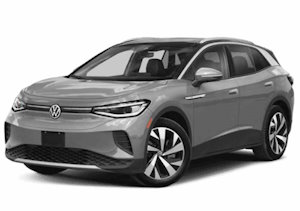 2024 VW ID.4 Owner's Manual